


Introduction: When you begin shopping for a water softener for your home, you will quickly find that market prices vary significantly. On the surface, two systems might look virtually identical—both feature a tall fiberglass resin tank, a plastic control valve on top, and a large salt reservoir. However, the true difference lies entirely within the brain of the control valve.
The industry is broadly split into two generational technologies: Traditional Timer-Based Softeners and Modern Demand-Initiated Regeneration (DIR) Systems. Investing in obsolete technology can cost you hundreds of dollars in hidden operating expenses over the lifespan of the machine. Today, Aqua Tech Texas breaks down the hard data to show you why "smart" regeneration is the superior economic and environmental choice for your home.
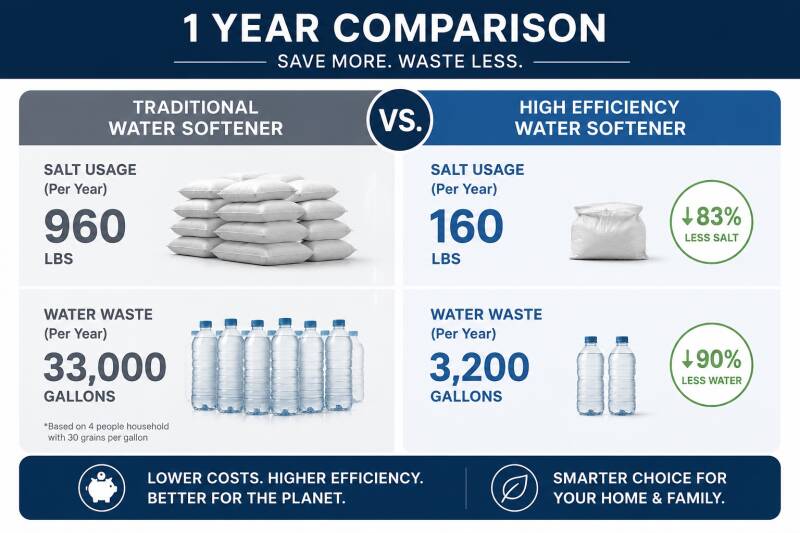
1. The Obsolete Model: Traditional Timer-Based Softeners Timer-based systems operate on a rigid calendar schedule, much like an old-fashioned alarm clock. When the technician installs the unit, they program it to run a regeneration cycle at a set interval—for instance, every 3 days at 2:00 AM.
The system does not care about your actual lifestyle.
-
The Vacation Waste Scenario: If your family packs up and goes on a two-week vacation, nobody is home using water. However, because the clock keeps ticking, the timer system will still run its heavy flush cycle 4 or 5 times while you are gone. This dumps dozens of gallons of pristine water and bags of expensive salt directly down the drain for absolutely no reason.
-
The Guest Hard-Water Scenario: Conversely, if you have extended family staying over for the holidays, your daily water consumption might triple. The system’s resin bed will become completely saturated with hard minerals by noon on day two. Because the timer isn’t scheduled to clean until day three, the system will begin letting raw, untreated hard water leak into your pipes, leaving stains on your fresh laundry and spots on your dishes.
2. The Modern Standard: Demand-Initiated Regeneration (DIR) DIR technology operates like a smart home appliance. Inside the control head sits a high-precision digital flow meter that acts as a gatekeeper, measuring every single gallon of water that moves through your house. The onboard computer calculates exactly how much mineral-trapping capacity remains inside the resin bed at any given moment.
It will only initiate a cleaning cycle when the resin has reached approximately 90-95% saturation.
-
Massive Resource Savings: According to industry field studies, a typical family of four switching from a timer-based system to a high-efficiency DIR system saves between 400 to 500 pounds of salt per year, alongside thousands of gallons of water. Over a decade of operation, this adds up to over $1,500 in direct utility and supply savings.
-
Dynamic Adaptation: If you are home alone, the system might wait 10 days before regenerating. If you host a pool party and run three consecutive loads of laundry, the system recognizes the heavy usage surge and dynamically schedules an early-morning regeneration to ensure your soft water stream is never interrupted.
The Verdict from Aqua Tech Texas: While timer-based units are slightly cheaper to purchase upfront, they act as a continuous drain on your wallet through excessive salt and water waste. At Aqua Tech Texas, we believe in providing sustainable, smart solutions designed to keep your ongoing operational costs as low as possible.
Call to Action: Ready to stop throwing money away on wasted salt and excess water bills? Contact Aqua Tech Texas today to evaluate your current system and upgrade to a high-efficiency smart softener that pays for itself!
Add comment
Comments