

As passionate pet owners in Texas, we spare no expense when it comes to our animals. We carefully scrutinize the protein percentages on kibble bags, invest in grain-free treats, and purchase ergonomic pet beds. However, there is one crucial ingredient for their long-term survival and vitality that often gets completely overlooked: the water sitting in their bowls. Because pets are physically much smaller than humans, their internal organs process substances at a highly compressed rate. The municipal tap water running through Texas homes—while generally deemed compliant for human adults—frequently carries chemical loads and hard mineral densities that can place chronic stress on your pets. Today, Aqua Tech Texas dives into the veterinary and scientific reasons why upgrading to premium filtered water is one of the best proactive healthcare decisions you can make for your four-legged family members.
1. The Invisible Threat of Chlorine and Your Pet’s Super-Snout To understand why your cat or dog might sometimes refuse to drink from their bowl—or why they prefer drinking out of a muddy puddle in the yard—you have to understand their olfactory system. A dog's sense of smell is roughly 10,000 to 100,000 times more acute than a human's. When city water departments treat tap water with chlorine or chloramines to disinfect it, humans might only catch a faint, temporary scent. To your dog or cat, however, that chemical smell is overwhelming, resembling a heavily chlorinated public swimming pool.
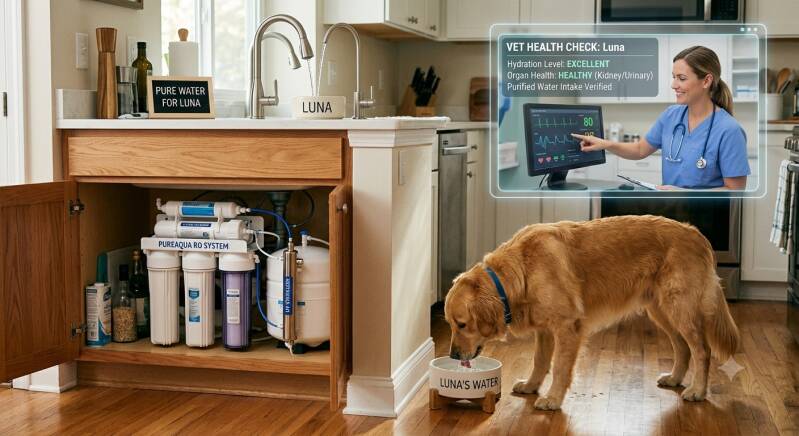
When a pet smells harsh chemicals in their water dish, their natural instinct is to avoid it. This leads to chronic, low-grade dehydration. Dehydration in pets doesn't always look like extreme lethargy; it can manifest as dry skin, increased shedding, low energy, and highly concentrated urine, which sets the stage for more severe metabolic conditions. By utilizing a Multi-Stage Carbon filtration or Reverse Osmosis (RO) system, you strip away 99% of these chemical disinfectants. The result is completely odorless, pristine H2O that smells safe and enticing to your pet’s super-sensitive snout.
2. The Hard Water Connection: Urinary Crystals and Bladder Stones Texas groundwater is notoriously "hard," meaning it is heavily saturated with dissolved calcium carbonate and magnesium. While human digestive tracts can process these minerals relatively easily, a pet's smaller urinary tract is far more vulnerable. When a pet continuously drinks highly hard water over a period of several years, their kidneys have to work in overdrive to filter out the excessive mineral load.
When the urine becomes oversaturated with calcium and magnesium, these minerals begin to crystalize in the bladder. Over time, these micro-crystals can coalesce into agonizing bladder stones (uroliths). This condition is particularly catastrophic for male cats and specific small dog breeds (such as Shih Tzus, Miniature Schnauzers, and Pugs) due to the narrow anatomy of their urethras. Treating bladder stones often requires emergency, invasive surgery costing thousands of dollars. Providing soft, low-TDS water via an RO purifier minimizes the mineral intake into their system, drastically reducing the baseline risk of crystallization.
3. Small Organs and Contaminant Sensitivity Heavy metals like lead, copper from aging household pipes, or trace agricultural runoff (such as nitrates and pesticides) can occasionally find their way into water supplies. If a 180-pound adult human consumes a trace micro-gram of lead, their liver and bones can absorb it with minimal immediate damage. However, if a 10-pound Pomeranian or a 7-pound Siamese cat consumes that exact same concentration, the toxic load per pound of body weight is exponentially higher. Over time, these heavy metals can accumulate in their biological tissue, contributing to early-onset kidney failure or liver damage as they age.
Aqua Tech’s Healthy Pet Checklist:
-
Switch to Glass or Stainless Steel: Plastic pet bowls can scratch easily, creating micro-grooves where bacteria thrive. Pair your filtered water with a clean glass or stainless-steel dish.
-
Keep it Flowing: Cats, in particular, are hardwired to prefer running water because, in the wild, stagnant water equals disease. Use filtered water in a circulating pet fountain to maximize their daily intake.
-
Wash Daily: Even with pure water, a pet's saliva introduces bacteria back into the bowl. Give it a quick wash every 24 hours.
Call to Action: Your pets rely on you completely for their health and safety. Don't let harsh tap chemicals or heavy minerals shorten their golden years. Contact Aqua Tech Texas today to explore our pet-friendly drinking water filtration packages and give your furry companions the gift of true, refreshing health!
Add comment
Comments