

Have you ever spent $200+ at a top salon for a stunning new hair color, only to watch it fade into a dull, brassy tone in less than three weeks? Or perhaps you've noticed that no matter how much luxury shampoo you use, your hair feels weighed down, brittle, and perpetually dry. Before you blame your stylist or your hair products, take a look at your showerhead.
In Texas, where tap water contains high concentrations of dissolved minerals, hard water is the single most common cause of non-genetic hair damage. Today, Aqua Tech Texas breaks down the exact biophysical mechanisms of how hard water sabotages your scalp health and why switching to soft water is the ultimate hair care upgrade.

1. The Chemical Reaction: The Creation of "Shampoo Curd"
When you pump shampoo into your hand, it is designed to bind with dirt and oil so they can be rinsed away with water. However, when shampoo meets the high levels of calcium (Ca 2+) and magnesium (Mg 2+) present in Texas hard water, a immediate chemical reaction occurs. Instead of dissolving into a rich lather, the minerals react with the fatty acids in the soap to form an insoluble, sticky residue known as soap scum or "shampoo curd."
This film cannot be rinsed away with hard water. It sticks firmly to your hair shafts, creating a barrier that prevents moisture from penetrating the core of your hair.
2. How Hard Water Opens the Cuticle and Destroys Hair Color
Under a microscope, a healthy hair strand looks like a pinecone, covered in tiny shingles called cuticles. Healthy cuticles lay flat, locking in natural moisture and reflecting light to give hair a glossy shine.
When you wash with hard water, the heavy mineral ions act like microscopic grit, forcing the cuticles to remain rough and wide open.
-
Loss of Moisture: Open cuticles allow internal moisture to evaporate, leaving hair feeling straw-like and frizzy.
-
Rapid Color Bleed: If you color your hair, those open cuticles allow expensive dye molecules to escape every single time you rinse. Furthermore, minerals like iron and manganese in hard water oxidize under heat, causing vibrant dyes to quickly turn brassy and yellow.
3. Scalp Calcification and Hair Loss
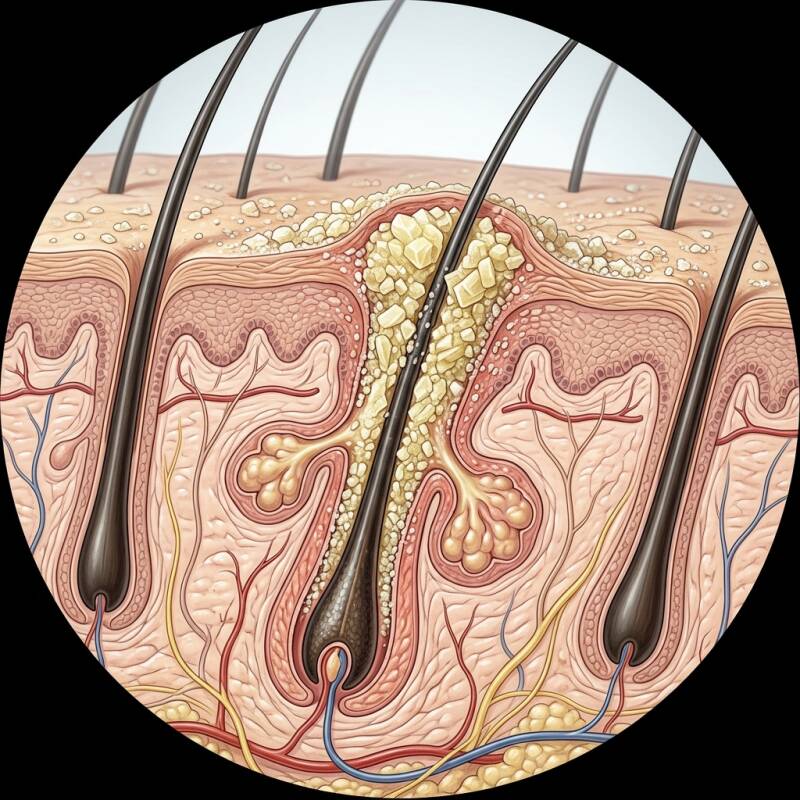
The impact on your scalp is even more concerning. Over time, calcium deposits can accumulate around the base of your hair follicles—a process known as scalp calcification. This hardened buildup restricts blood circulation to the follicle roots and clogs the pores. Without proper blood flow and oxygen, hair follicles shrink, producing thinner hair strands and eventually causing premature hair shedding.
The Soft Water Transformation:
Installing a water softener removes 100% of the hardness minerals through ion exchange before the water reaches your shower.
-
Your shampoo lathers effortlessly, meaning you can use up to 50% less product.
-
Your scalp pores can finally breathe, restoring healthy circulation.
-
Your hair cuticles close completely, locking in brilliant salon color and restoring natural elasticity and shine.
Call to Action:
Stop letting hard water wash your expensive hair treatments down the drain. Contact Aqua Tech Texas today to learn how a home water softener can transform your daily shower into a spa-level hair restoration experience!
Add comment
Comments